Life is a cycle of creation, sustenance, and dissolution. Shiva and Shakti symbolize this eternal rhythm — stillness and movement, bliss and dynamism. When we embrace both, true celebration and collective welfare blossom.
We chase shadows in life, forgetting the source. Just as a child cannot catch his shadow until he touches his head, the jiva cannot know bliss until it turns inward. Ishwara is that pure consciousness – when ignorance dissolves, the jiva realizes its own Sat-Chit-Ananda nature.
Life is not meant to be deferred to tomorrow. A miser who saved wealth for his last days realized too late that even three lakh rupees could not buy him a single moment of life. Every instant is priceless—today itself is the time to live fully.
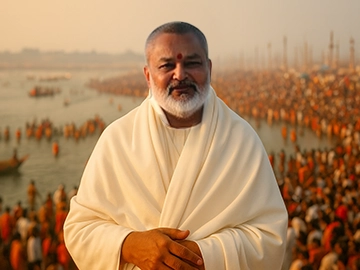
Mahakumbh at Prayagraj is the grandest expression of India’s Vedic heritage, where millions gather at the holy confluence of Ganga, Yamuna, and Saraswati. Beyond ritual, it is a reminder to shed negativity and embrace virtues. Through the practice of Transcendental Meditation, as taught by Maharishi Mahesh Yogi Ji, the wisdom and goodwill gained here can be preserved as lasting bliss.
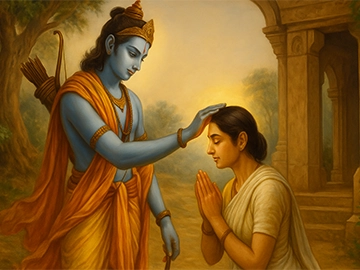
Ahalya’s tale from the Brahma Purana shows that life awakens only with the divine touch of Shri Rama. Just as Tulsidas, inspired by Valmiki’s Ramayana, brought Rama’s story to every heart, we too await Rama’s touch to enliven our consciousness. Maharishi Mahesh Yogi Ji revealed the simplest path—daily practice of Transcendental Meditation—to awaken inner bliss and transform life.
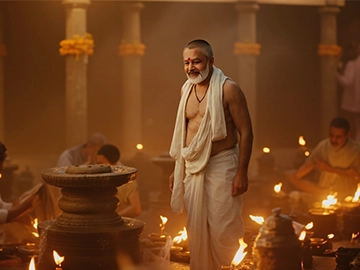
On this sacred day of Maha Shivaratri, Brahmachari Girish Ji urged devotees to honor Lord Shiva—through temple abhishek, home rituals, or even mental worship during meditation. Shiva, the eternal giver of grace, dwells in the tranquil fourth state of consciousness within every being. With mere remembrance, He bestows infinite peace and blessings.

His Holiness Maharishi Mahesh Yogi Ji often said, “Life is Bliss.” While the West believes life is a struggle, the Indian vision reveals bliss as the very nature of life. Negativity is not inherent—it is born from our own polluted thoughts. Just as a honeybee gathers nectar while flies settle on filth, so too must we choose purity within to experience positivity outside.
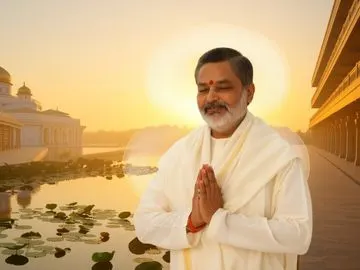
Even after independence, India continues to carry the burden of colonial mentality in language, education, governance, and lifestyle. Brahmachari Girish Ji warns that this has pushed India’s ancient knowledge traditions into crisis. English dominance, alienation from Indian languages, Western cultural symbols, and Macaulay’s education system have distanced the youth from their roots. The solution lies in cultural and spiritual renaissance—reclaiming our swabhava, embracing Indian traditions, and nurturing pride in our heritage. Through reforms like the National Education Policy and the practice of Transcendental Meditation, India can free itself from mental slavery and achieve true self-reliance.
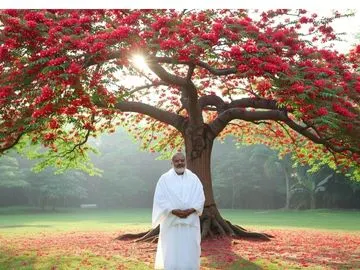
Through the story of the Semal tree and Narada, Brahmachari Girish Ji explains that true strength lies not in grandeur but in detachment. Grandeur itself is not wrong—attachment to it is. When we let go of ego, discipline our work, and expand compassion, we rise above old habits that hold us back. Fear and procrastination often prevent us from change, but self-reflection and courage open the way to growth. By embracing new experiences and nurturing joy, one transforms life into its higher form. Regular practice of Transcendental Meditation helps dissolve fear, expand awareness, and establish balance in life.
Subscribe to keep up with fresh news and exciting updates.